Google's June spam update and AI citations: what Southeast Asian B2B brands should stop doing — and what actually builds visibility
Google's June 2026 spam update targets thin listicles and AI citation manipulation. What B2B brands in Southeast Asia should audit, stop, and do instead.
Two things are true at the same time — and most B2B marketing teams in Southeast Asia are only acting on one of them.
First: buyers in Singapore, Malaysia, and Indonesia are shortlisting vendors inside ChatGPT, Perplexity, and Google AI Overview. If your company is absent from those answers, you lose deals before the first demo. We have documented that gap with audit evidence, not theory.
Second: on 24 June 2026, Google began rolling out a global spam update that enforces policies treating attempts to manipulate generative AI responses in Google Search as spam — the same category as link schemes and scaled content abuse.
Those two facts are not in conflict. But they create a trap for vendors who hear “you need AI visibility” and respond by buying their way into the answer.
This is the AI visibility trap — and Southeast Asian B2B brands are walking into it faster than most.
What actually changed
Google did not announce new spam rules on 24 June. It released an enforcement update — a SpamBrain upgrade applied globally and to all languages, with rollout expected to take a few days.
The policy shift that matters arrived earlier. In May 2026, Google expanded its spam documentation to state explicitly that spam includes attempting to manipulate generative AI responses in Google Search. That covers AI Overviews and AI Mode, not just traditional blue-link rankings.
Google’s own definition now reads, in part:
Spam refers to techniques used to deceive users or manipulate our Search systems into featuring content prominently, such as attempting to manipulate Search systems into ranking content highly or attempting to manipulate generative AI responses in Google Search.
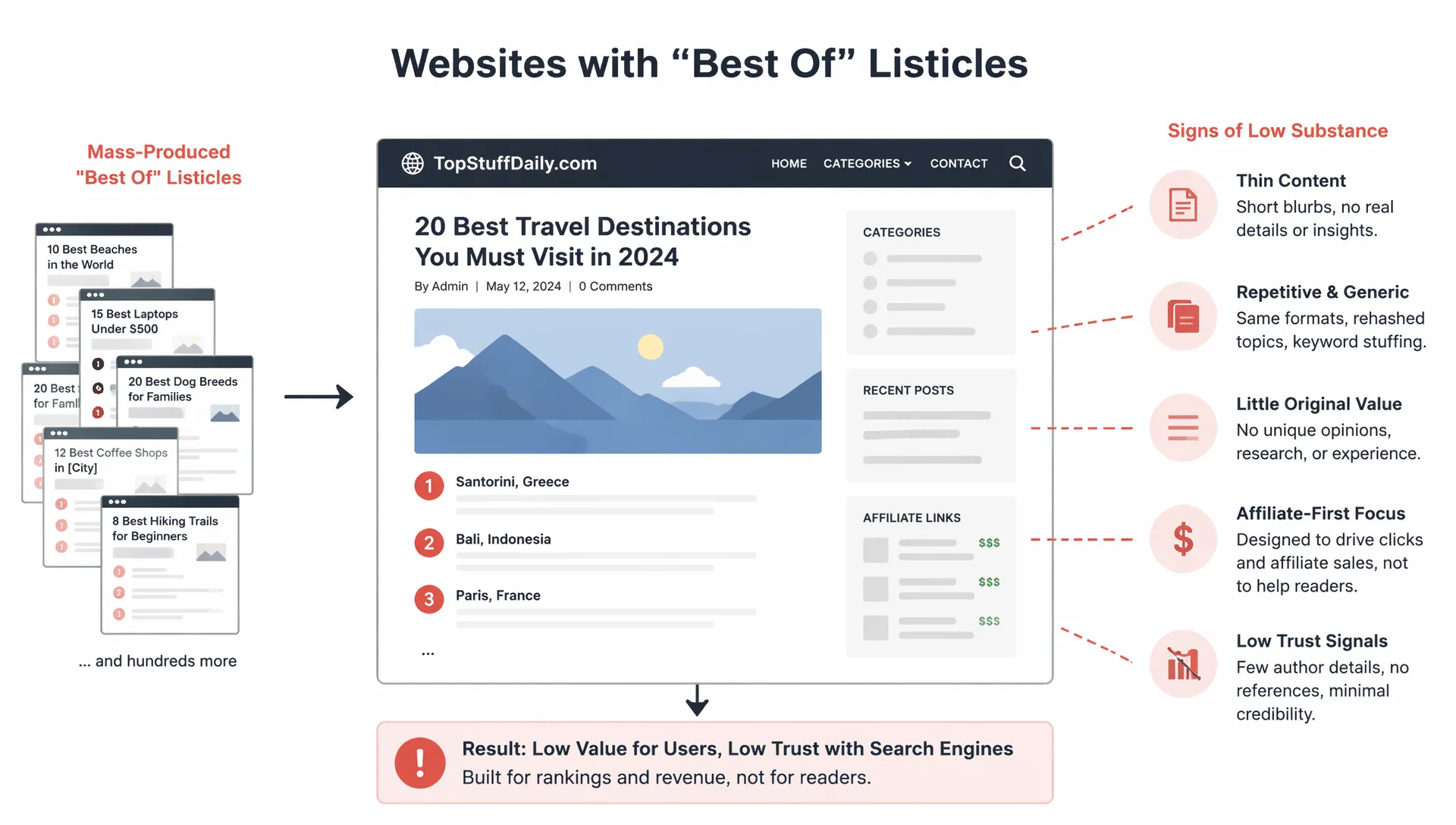
The June update is the first major enforcement cycle to land after that expansion. Industry observers had already documented a pattern: self-promotional “best of” listicles surfacing as authoritative citations inside AI Overviews, often with thin substance and obvious commercial intent. Google has now formalised the response.
What this means in practice: if your visibility strategy depends on manufacturing mentions — paid placements on roundup sites, networks of comparison pages on expired domains, scaled AI-generated listicles seeded across third-party blogs — you are not building AI visibility. You are accumulating spam risk.
And spam demotion in Google Search does not stop at rankings. Sites that violate spam policies may rank lower or disappear from results entirely — which also removes them from the pool of sources Google uses when it generates AI answers.
The tactics now under active enforcement
Google’s spam catalogue did not get a separate “AI rulebook.” The same categories that applied to classic SEO spam now apply to AI surfaces. For B2B vendors evaluating GEO or AEO agency pitches, these are the patterns to treat as red flags:
| Tactic | Why it is risky now |
|---|---|
| Thin “best of” listicles with no local substance — generic vendor tables, no compliance detail, obvious affiliate intent | Scaled content abuse; often the exact pages AI Overviews had been citing |
| Paid placement on comparison sites built primarily to appear in AI answers | Inauthentic mentions; treated similarly to bought links |
| Scaled AI-generated roundup pages across multiple domains or languages | Explicitly named in Google’s scaled content abuse examples |
| Translation without value — copying an English listicle into Bahasa, Thai, or Vietnamese at scale | Scraping and scaled abuse; different source pool, same enforcement logic |
| Crawler-only or shadow content served to AI bots but not human buyers | Cloaking and deceptive practices |
| Site reputation abuse — parking unrelated “best software” pages on high-authority domains | Third-party content published mainly to borrow ranking signals |
None of this requires a buyer to report you. SpamBrain is automated. Recovery, when it comes, is measured in months — not days.
Why Southeast Asia is especially exposed
This is not because Google targets ASEAN markets specifically. The update is global. The exposure is behavioural.
Buyers here move fast. Cross-market audit work shows category shortlists forming in AI answers today — in English and in local languages. A Singapore HR director and a Jakarta HR manager do not get the same Perplexity shortlist. Language is a separate visibility profile, not a translation task.
Vendors here feel behind. Western incumbents and global review platforms already dominate many English-language AI answers. Local Series A and Series B companies respond with urgency — which makes “guaranteed AI citation” packages attractive.
The shortcut economy is loud. GEO playbooks imported from US and European markets often repackage old affiliate SEO: buy a mention on a listicle, spin up ten comparison pages, seed brand names across a blog network. In ASEAN, where category analyst coverage is thinner and affiliate roundup sites are plentiful, that playbook spread quickly.
The wrong metric creates false confidence. A vendor can appear in Google AI Overview on one query and be absent from ChatGPT and Perplexity on the same buyer prompt — Swingvy’s payroll audit showed exactly that pattern on 26 June 2026. Teams that celebrate a single AI Overview mention without auditing all engines — and without asking how that mention was earned — are optimising for a surface, not a strategy.
The companies most at risk are not the ones ignoring AI visibility. They are the ones panicking into manipulation because they correctly understand the stakes and incorrectly trust the shortcut.
Thin listicle vs substantive comparison
A fair question: if Google is cracking down on “best of” content, is all comparison content now toxic?
No. Google distinguishes content built to manipulate from content built to help buyers decide.
The pattern under enforcement looks like this:
- A page titled “Best HR software Singapore 2026” with a ranked table, affiliate links, and no mention of CPF, SDL, IRAS filing, or MOM record-keeping requirements
- The same template republished across
.co,.com, and expired domains with swapped city names - A brand that appears on the list because they paid for placement, not because an analyst evaluated the product
Substantive comparison content looks different:
- Local compliance requirements explained with links to primary sources (IRAS, MOM, BPJS, EPF — depending on market)
- Methodology stated — when data was retrieved, which buyer prompts were tested, what engines were queried
- Multiple vendors named with neutral framing and genuine selection criteria
- FAQ structured around how buyers actually research
Our Singapore payroll comparison follows the second model: IRAS controls, engine-by-engine citation differences, audit-backed shortlist data, and a methodology note. That is the kind of page AI engines cite because it helps a buyer — not because someone manufactured a mention.
If you are a B2B vendor, the test is simple: would this page still be worth publishing if AI Overviews did not exist? If the answer is no, Google now reads it as spam — and your buyers probably already did.
What to stop doing now
If any of the following is in your current or planned visibility programme, pause and audit before the next content sprint:
- Paid listicle placements on sites whose primary purpose is ranking in AI answers or Google — especially networks that offer the same “best of” page across multiple domains
- Agency contracts promising AI citations through mention seeding, third-party blog networks, or “recommendation poisoning” tactics
- Scaled content programmes — AI-generated comparison pages across categories you do not actually serve, or across markets where you have no local product depth
- Language expansion by translation — publishing Bahasa or Thai versions of thin English listicles without local compliance research
- Celebrating AI Overview presence without source quality checks — if your only citations come from suspicious roundups, that presence is fragile
Link spam carries a specific warning in Google’s documentation: if you built rankings on manipulative links, removing the links does not automatically restore the benefit. The same logic applies to manufactured citation footprints. Unwind them deliberately; do not wait for a manual action email.
What actually builds visibility in Southeast Asia
The playbook is slower than a GEO shortcut. It is also the only one that survives enforcement — and the only one that works across ChatGPT, Perplexity, Claude, and Google at the same time.
1. Audit before you publish.
Run the exact prompts your buyers type — per country, per language. Record who gets cited, which sources each engine uses, and where you are absent. That baseline separates a visibility gap from a spam footprint. Request a free AI visibility audit or replicate the protocol from our ASEAN buyer research.
2. Publish primary substance, not mention bait.
Invest in content only your company can credibly produce: implementation guides grounded in local regulation, original research with stated methodology, customer evidence with specifics, product documentation structured for comparison queries. AI engines cite sources that reduce buyer uncertainty — not sources that exist to name your brand.
3. Earn third-party citations; do not buy them.
Comparison articles, review platforms, and analyst coverage matter because AI engines trust third parties for vendor shortlists. The goal is to be named in those sources because your product and market presence deserve it — through demos, integrations, case studies, and category participation — not because you purchased a row in a table.
4. Treat each market and language as a separate visibility profile.
Mekari Talenta appeared in English Perplexity but not Bahasa Perplexity in our Indonesia audit. Swingvy appeared in Malaysia ChatGPT but not Singapore ChatGPT. A single English content programme does not cover ASEAN. Neither does a translated listicle.
5. Track all engines, not just Google.
Google’s June update is Google’s enforcement event. Your buyers are not confined to one surface. A strategy that games AI Overviews while remaining absent from ChatGPT still loses deals — and now carries demotion risk on the Google side as well.
6. Clean up legacy content before you add new content.
If a previous agency built doorway pages, thin roundups, or scaled comparison networks on your behalf, inventory and remove them. Making your site compliant is a prerequisite; adding more content on top of a spam footprint does not fix the footprint.
The window vendors still have
Google’s May policy expansion and June enforcement are not a one-day event. Analysts expect citation-quality enforcement to ramp over subsequent quarters as SpamBrain learns new patterns.
That means two things for Southeast Asian B2B brands:
If you have been cutting corners, you still have time to audit and unwind — but the cost of delay rises with every enforcement cycle.
If you have been building substance, competitors who get filtered out of the citation pool make your earned mentions more valuable — in Google AI Overviews and in the conversational engines your buyers already use.
The visibility gap is real. The shortcut economy is a trap. Closing the gap correctly starts the same way it always should have: measure what AI engines say about your category today, then earn the citation with work buyers can trust.
If you want a baseline for your company, request a free AI visibility audit — or start with why Singapore B2B companies are invisible in AI search to see the audit methodology in practice.
Sources and methodology
Policy references are from Google's published spam documentation and the June 2026 Search Status Dashboard entry, retrieved 26 June 2026. SEA-specific examples draw on Citable visibility audits run on 26 June 2026 across Singapore, Malaysia, and Indonesia payroll buyer prompts. This article is strategic guidance, not legal advice on Google's enforcement decisions.
Citable audit data (primary)
- Citable visibility audit — Swingvy payroll prompts across Google, ChatGPT, Perplexity, and Claude, 26 June 2026
Policy and third-party references
- Google Search Central — Spam policies (retrieved 26 June 2026)
- Google — June 2026 spam update (Search Status Dashboard) (retrieved 26 June 2026)
- Search Engine Land — Google releases June 2026 spam update (retrieved 26 June 2026)
- Why Singapore B2B companies are invisible in AI search (Citable) (retrieved 26 June 2026)
- How B2B buyers in Singapore, Malaysia, and Indonesia research software (Citable) (retrieved 26 June 2026)
- Best payroll software for Singapore SMEs — 2026 comparison (Citable) (retrieved 26 June 2026)
Frequently asked questions
- What did Google's June 2026 spam update change?
- Google released the June 2026 spam update on 24 June, applied globally and to all languages. It did not introduce new spam policies. It is an enforcement upgrade to SpamBrain — Google's AI-based spam prevention system — following a May 2026 policy expansion that explicitly named attempting to manipulate generative AI responses in Google Search as spam.
- Does the spam update only affect Google rankings?
- No. Google's spam policies apply to all Search surfaces, including AI Overviews and AI Mode. Sites demoted for spam violations risk lower rankings or removal from results entirely — which also removes them from the sources Google uses to generate AI answers. Manipulative citation tactics can cost you twice: traditional visibility and AI Overview citations.
- Are all "best software" comparison articles now spam?
- No. Google targets scaled, unoriginal, or manipulative comparison content — pages generated primarily to game rankings or AI citations without helping buyers. Substantive comparisons with local compliance detail, primary sources, methodology, and genuine buyer utility are not the problem. Thin affiliate tables with no regional substance are.
- Why does this matter more for B2B brands in Southeast Asia?
- ASEAN buyers are adopting AI search quickly — often in local languages — and vendors know they are losing shortlists they never see. That urgency drives purchases of "get cited in 30 days" GEO packages built on paid listicle placements and scaled roundup pages. Those tactics now sit inside Google's stated spam catalogue, and the June update is the first major enforcement wave under the expanded AI policy.
- Does Google enforcing AI citation spam fix ChatGPT and Perplexity visibility?
- No. This update is Google's. ChatGPT and Perplexity have separate source pools and policies. But the principle holds: manufactured mentions degrade trust over time across engines. The durable approach is the same — audit per market and per language, publish substance buyers and engines can trust, and earn third-party citations rather than buying them.
- What should a Southeast Asian B2B company do first after this update?
- Run a visibility audit on the exact prompts your buyers use — separately for each country and language you serve. Note where you appear organically versus only on suspicious third-party roundups. Stop any paid mention or scaled listicle programme before adding new content. Then invest in primary evidence: compliance explainers, implementation guides, and original research that third parties can cite without manipulation.
More visibility research
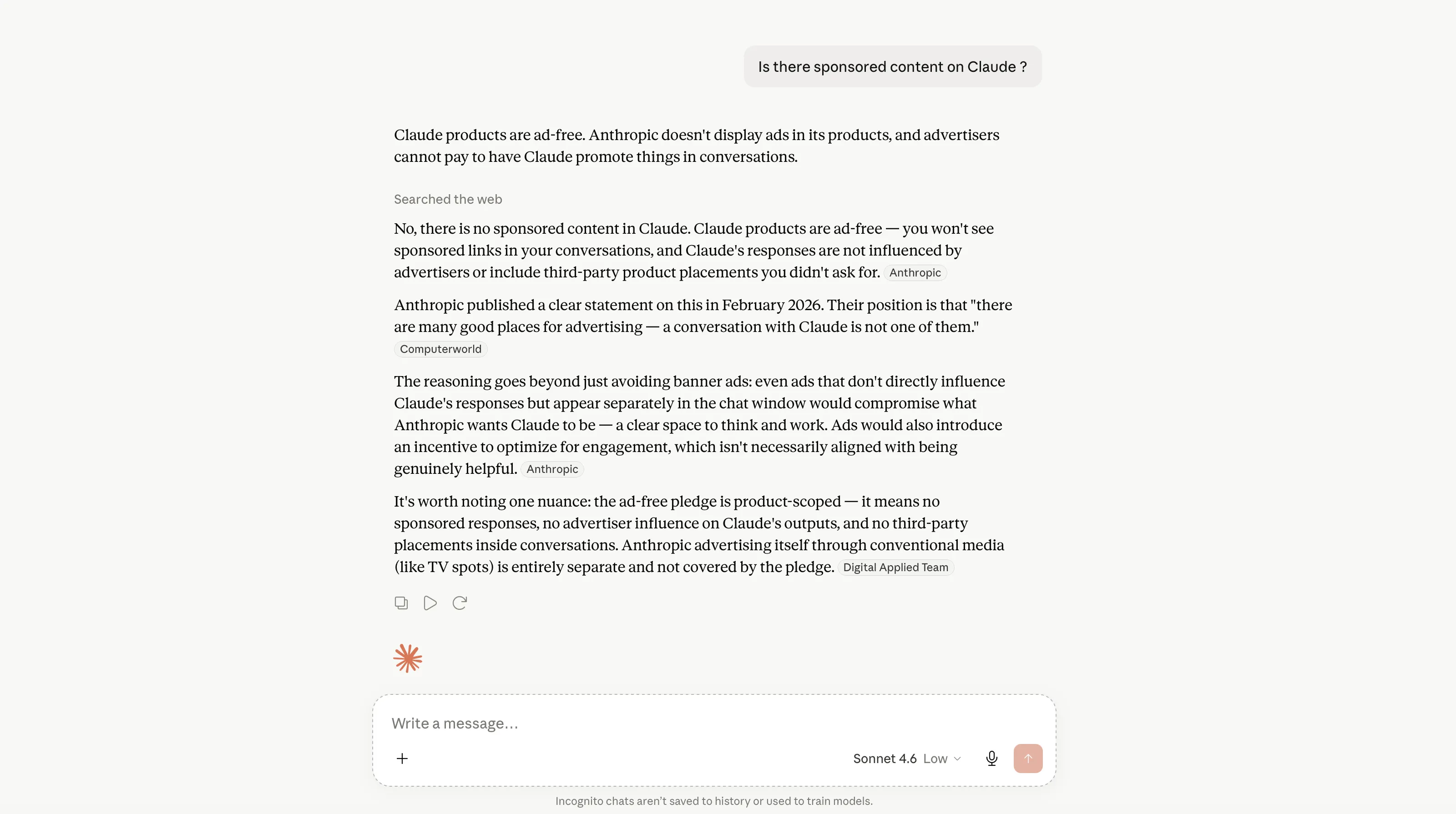
Claude cited a Value Chain Asia article labeled "Sponsored Content" on a Singapore logistics prompt. We checked if anyone else reported it.
Why Singapore B2B companies are invisible in AI search — and why most don't know it yet
B2B buyers in Singapore research software in ChatGPT and Perplexity. Most local SaaS companies have no AI visibility strategy yet.